Click the link to view the full version: From Classroom to HKU: WASCZ Students Shine at the Global Entrepreneurship Challenge
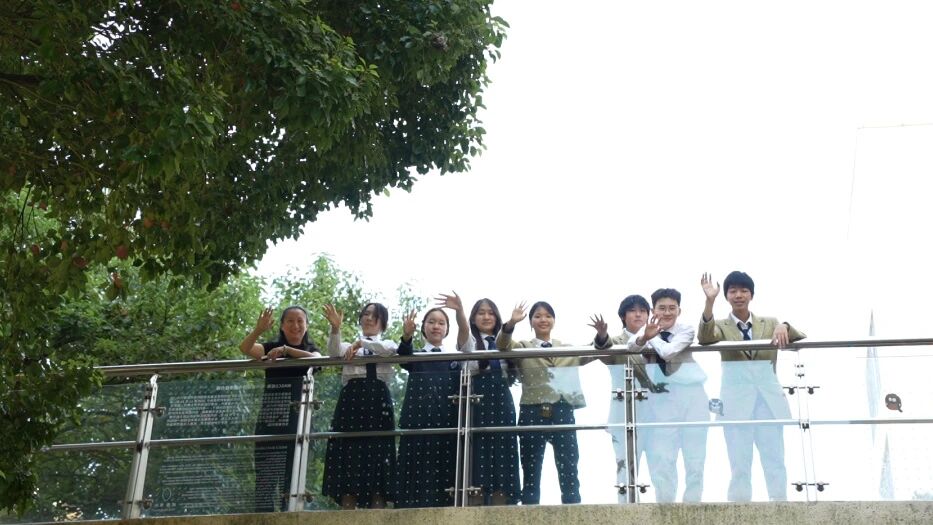
Thirteen students from WASCZ recently took part in the KNF × HKU CEDARS Global Entrepreneurship Challenge at the University of Hong Kong (HKU).
WASCZ was proud to be the only secondary school from Chinese Mainland invited to participate, alongside schools from Hong Kong and Macau. Throughout the programme, our students also had the opportunity to learn and collaborate with HKU undergraduate and postgraduate students, experiencing university life first-hand.
About the KNF × HKU Global Youth Entrepreneurship Challenge
The KNF × HKU Global Youth Entrepreneurship Challenge is jointly organised by the Centre of Development and Resources for Students (CEDARS) at the University of Hong Kong and the Knights Nurturing Foundation. Through exploration and practical experience, the competition aims to help young people develop core professional competencies, while offering an immersive university experience and hands-on entrepreneurial challenges.
An Immersive HKU Experience
For our students, HKU was much more than the venue for a competition—it became their classroom for the week.
Students attended business lectures and entrepreneurship sessions, conducted field research across Hong Kong, received professional mentoring, developed business proposals and finally pitched their ideas to industry judges.
A highlight of the programme was the Entrepreneurship Academy lecture “Researcher Founder: From −1 to 1”, delivered by Dr. Qi Lu, Founder and CEO of MiraclePlus and former senior executive at Microsoft, Baidu and Yahoo. Drawing on his extensive experience in global technology companies and entrepreneurship, Dr. Lu shared valuable insights into innovation and the journey from research and ideas to real-world ventures. His session gave students a rare opportunity to learn directly from one of the technology industry’s most experienced leaders and to consider how innovative ideas can be transformed into meaningful and viable solutions.
From SDGs to Real-World Solutions
The secondary-school challenge centred on the United Nations Sustainable Development Goals (SDGs) and social innovation, encouraging students to use business thinking to respond to real social issues. Teams were assigned one of six themes: Aging Population & Elder Care, Retail & F&B Transformation, Subdivided Units & Cramped Micro-Living, Mental Health & Youth Well-Being, Food Waste & Urban Waste Management, Climate Resilience & Urban Heat Island Effect. Students then took their learning beyond the lecture theatre. During city-wide field research, secondary and university students worked together to observe real local challenges before transforming their findings into practical entrepreneurial ideas.
One WASCZ team was assigned “Aging Population & Elder Care.” Their project, GENWISE, explored a practical challenge: how can businesses better understand the difficulties elderly people experience when using everyday products, apps and services? The team proposed involving elderly users in testing services such as banking, healthcare, self-checkout and shopping, then providing businesses with insights to make their products more accessible and age-friendly.
In developing GENWISE, students had to consider the entire entrepreneurial process—from identifying a problem and understanding target users to designing a solution, developing a business model and evaluating social impact.
Their hard work resulted in an outstanding achievement:
🏆Top Project Award — No. 1 among all secondary-school teams
🏆Best Business Model Award
The Top Project Award recognizes excellence across innovation, feasibility, social impact and presentation quality.
Looking Beyond the Competition
At WASCZ, competitions are not simply about winning awards. By carefully selecting a wide range of academic and real-world opportunities, we aim to help students discover their interests, recognize their strengths and explore possible future pathways. Whether through entrepreneurship, economics, science, technology or other fields, these experiences allow students to apply classroom knowledge in authentic contexts, work with universities and industry professionals, and develop the skills required beyond school.
Through sustained exposure to different competitions and enrichment opportunities, we hope to help students make more informed choices about their university studies and future careers, while developing the confidence, curiosity and adaptability to shape their own futures.
More News