Click the link to view the full version: WASCZ | A Dialogue with Wycombe Abbey
For over a decade, WASCZ and Wycombe Abbey have been united by a shared commitment to holistic education. We were delighted to welcome representatives from our UK sister school once again, strengthening our partnership through continued dialogue and collaboration.
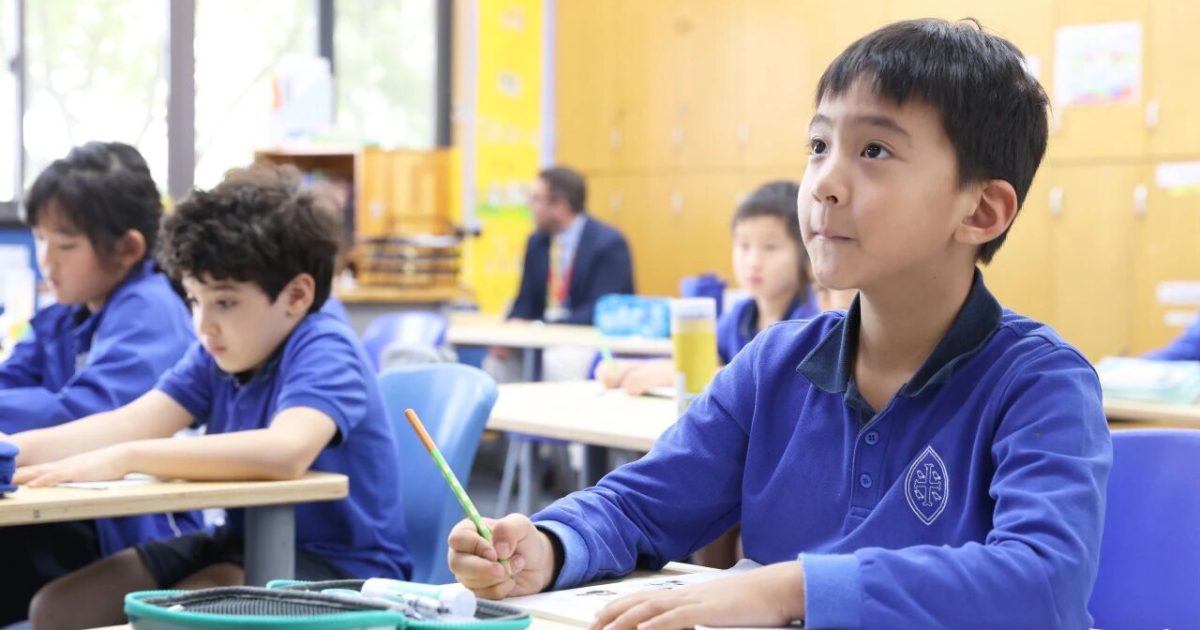
The delegation, included Mr Patrick Sherrington, Chair of Wycombe Abbey International, Mr Peter Warren, Chairman of Council at Wycombe Abbey, Mr Scott Bryan, Managing Director (International) of Wycombe Abbey International and Mr Mark Mackenzie Crooks, Bursar of Wycombe Abbey. They visited lessons and met with our academic leadership team and PSA members to discuss holistic education, student development and future collaboration.
We also spoke with the delegates about the essence of holistic education, the importance of a global outlook and the skills students need in the age of AI, addressing key questions at the heart of parents’ concerns about their children’s future.
01 “Campus Impressions”
Mr Patrick Sherrington
Chair, Wycombe Abbey International
“Every time I come here, I’m impressed by the energy and enthusiasm of the school. It’s a wonderful setting, the facilities are absolutely top-class, the staff are clearly very committed, and the leadership team is of high quality. The pupils are happy and full of energy, and that makes a real difference.”
Mr Peter Warren
Chairman of Council, Wycombe Abbey
“It’s great to see the enthusiasm and happiness of our pupils, as well as their diligence and hard work. What I particularly appreciate is the way WASCZ combines the best elements of Chinese education with an international dimension. The different languages spoken across the school and the international atmosphere are particularly impressive and exciting.”
Mr Mark Mackenzie Crooks
Bursar, Wycombe Abbey
“This is my first visit to China and, of course, to WASCZ. What has particularly surprised me is how much of the natural environment has been incorporated into the campus. The facilities are absolutely first-class, and I’ve been really impressed to see how the Forest School approach is used in the Kindergarten.”
Mr Scott Bryan
Managing Director (International), Wycombe Abbey International
“When I look at outstanding schools, I look at the quality of leadership, the focus on pupils, and a culture of continually reflecting and improving. I can see all of those things here. You can really tell whether pupils feel valued at school and whether they are making progress. They are at the heart of the school.”
02 “A Shared Vision for Holistic Education”
Mr Patrick Sherrington
Chair, Wycombe Abbey International
“We want all Wycombe Abbey schools to have the same DNA as Wycombe Abbey. That means providing high-quality academic teaching alongside the holistic development of the individual. We want our graduates not only to achieve academically, but also to go out into the world with an appreciation of nature, music, drama and sport. All these things help to make a well-rounded person who will be happy and able to achieve their goals.
I think we’re seeing a much greater focus on collaboration, This is really important and benefits both pupils and staff. I would definitely like to see more staff exchanges, as well as more opportunities for pupils to connect through competitions, projects and other activities. Giving pupils across our schools opportunities to build connections and get to know one another is hugely important. It means that, when they graduate, they will have friends and contacts around the world, which can benefit them both socially and professionally.”
Mr Peter Warren
Chairman of Council, Wycombe Abbey
“Wycombe Abbey is about combining academic excellence with holistic or broad education, giving pupils the opportunity to thrive. That may be in sport, music or drama, or simply in becoming a good citizen and a good fellow pupil. I really believe that happy and fulfilled pupils will perform best academically and go on to become successful, happy and fulfilled adults.”
Mr Scott Bryan
Managing Director (International), Wycombe Abbey International
“We want Chinese pupils to be proud of their own culture while also developing an international mindset. Many of these students will go on to lead and work with global teams, so that international outlook is really important.
What has impressed me is the Global Perspectives programme and the way international and local pupils interact as one big family. Through these day-to-day interactions, they learn about one another and different cultures.”
03 “What Parents Want to Know”
During a discussion with parents, members of the PSA raised questions about the issues that matter most to families——
What career advice would you, as experienced professionals offer our students?
Mr Peter Warren
Chairman of Council, Wycombe Abbey
“Core technical skills will always be important in a career in finance. In my business, we recruit many people with backgrounds in mathematics, engineering and computer science, and these remain important routes into the sector.
However, as artificial intelligence develops, the ability to think independently and apply intelligence is becoming increasingly important. Students need technical skills, but they also need emotional intelligence and the ability to think broadly. I believe the holistic education offered at WASCZ provides a very good foundation for a future career in finance.”
Mr Mark Mackenzie Crooks
Bursar, Wycombe Abbey
“My advice to students would be to experiment, study subjects that interest you, and try a wide range of activities. This helps you understand how things work, how they fit together, and how you can influence them. Be curious and investigate how things are put together.”
What challenges might students face when studying overseas, and how can they prepare?
Mr Scott Bryan
Managing Director (International), Wycombe Abbey International
“It’s really important to develop an international mindset and a global outlook, because many students will go on to lead and work in multicultural teams.
First, students need the right curriculum to help them become critical-thinking global citizens. Secondly, intercultural empathy is essential: understanding different cultures and learning to see things from different perspectives. Finally, students need opportunities to gain real-life experience. We should create more opportunities for pupils here to connect with students around the world and in the UK. The Wycombe Abbey global network provides an ideal setting for this.”
Mr Mark Mackenzie Crooks
Bursar, Wycombe Abbey
“British university education is highly interactive, with students expected to collaborate in their learning. I would encourage students who plan to study overseas to embrace that environment and gain a wide range of experiences before they go. These experiences can help them interact with people from different backgrounds, make friends and integrate more easily into university life.”
In the age of AI, how can education uphold its core principles while embracing change?
Mr Peter Warren
Chairman of Council, Wycombe Abbey
“It’s very important that we don’t confuse equipping pupils to use AI with changing the way we educate them. We believe it remains enormously important for children to receive a sound education. They should not spend their whole lives on devices, but should learn the fundamentals of subjects such as mathematics and literature, while developing their critical thinking.
The starting point for engaging with AI is having an intellectual approach to the world. It is becoming less important simply to be able to code or do mathematics; what matters more is being able to formulate a good question and then understand the answer intelligently. For me, it always comes back to breadth of education, strong academics and a broader understanding of the world.”
As committed practitioners of holistic education, Wycombe Abbey and WASCZ continue to deepen their partnership through dialogue and shared learning, while exploring the many dimensions of holistic education in their own contexts. The value of collaboration lies not only in sharing experience, but also in bringing different educational perspectives together to broaden the opportunities available to pupils.
Through continued connection and shared exploration, we hope to extend learning beyond the boundaries of the classroom and geography, helping every pupil deepen their understanding of the world and discover their own potential. As Mr Peter Warren reflected, the aim is for every WASCZ student to become not only academically successful, but also a more fulfilled individual, equipped with a broader outlook and greater possibilities for the future.
More News