Click the link to view the full version: A Conversation with the Director of the Wycombe Abbey Global Horizons Programme
As AI continues to reshape the way we learn, and technology makes communication across time zones and national borders easier than ever before, an increasingly important question emerges: what qualities will young people need to thrive in the future?
Perhaps part of the answer lies in developing a global perspective. We believe that young people who are able to flourish in an increasingly interconnected world will need far more than strong academic foundations. They will also require intercultural understanding, collaboration skills, leadership, and the ability to build trust and meaningful connections with people from diverse backgrounds. These are qualities that can only be truly developed through authentic cross-cultural engagement.
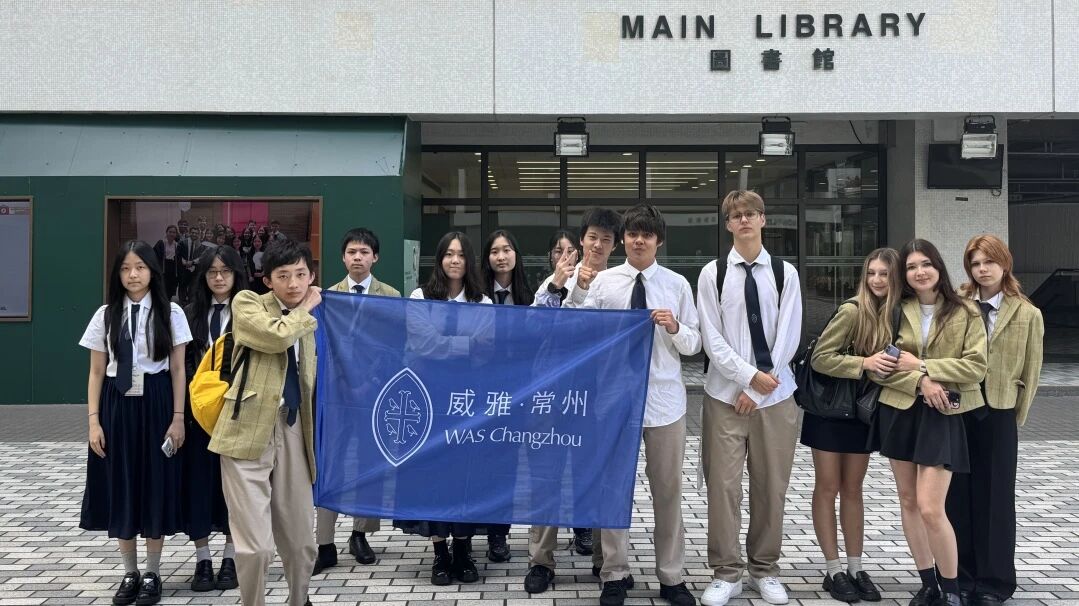
Launching in September 2026, the Wycombe Abbey Global Horizons Programme will provide exactly these opportunities. Drawing upon the extensive network of Wycombe Abbey schools and partners around the world, the programme will create structured and sustained opportunities for inter-school exchange and global collaboration. Every WASCZ student will have the chance to experience different cultural contexts firsthand, learn alongside peers from diverse backgrounds, and grow through meaningful international engagement.
A world of schools. A world of opportunities. Introducing the Wycombe Abbey Global Horizon Programme.
To explore the vision, design and future direction of the Global Horizons Programme, we sat down with Mr Howard Tuckett, Group Director of the Wycombe Abbey Global Horizons Programme, to discuss how the initiative is bringing new energy and opportunities to holistic education in an era shaped by globalisation and artificial intelligence.
Q1 Could you briefly introduce the Wycombe Abbey Global Horizon programme? What are its unique strengths?
“The Wycombe Abbey Global Horizons Programme is really about connectivity. It is about offering our students as many opportunities as possible to connect with one another. As our group of schools continues to grow, we are now spread across four regions: the UK, Thailand, Hong Kong and China, with Wycombe Abbey UK at the centre of this network. We also have Singapore coming online soon, and we hope to include other schools across Southeast Asia in the near future.”
Q2 In your opinion, what are the core educational values and developmental goals of the Global Vision programme?
“It is a very new project, but it is based on an established concept. These kinds of connectivity initiatives have existed ever since we had more than one school, and we have always been building links between them. What we are creating now is a formal and structured framework that ensures all students have equal opportunities to connect with one another through academics, ECAs, sport, drama and music. Around half of the programme is also focused on connecting staff, providing professional development opportunities, and raising standards consistently across all schools within the group.”
Q3 How is the programme structured for students of different age groups? What specific experiences and benefits can students gain?
“One of our targets is that every student from Grade 4 upwards will have at least one annual opportunity to visit another campus. Many students will become quite familiar with other campuses as they travel several times throughout their school careers.
Children in Kindergarten will also be able to connect with other Kindergarten students, although they are unlikely to travel at such a young age. Instead, they will connect virtually through large screens and shared online activities. Teachers will collaborate with one another, and there may be joint Teams sessions between classes in different schools, perhaps one in Bangkok and one in Changzhou. In this way, four- and five-year-olds can learn together despite being in different parts of the world.
At the other end of the age range, Sixth Form students will collaborate on university preparation projects. By that stage, many of them will already know one another quite well, having met several times and visited each other’s schools. In terms of age groups, the programme is universal — all students can expect to be involved.”
Q4 Many parents want to know how to participate in this programme. Which students are eligible, and how can they apply?
“As projects are developed, each school will either invite students directly or make opportunities available to students within the relevant age group, skill set or activity area. Students will be informed accordingly and, where appropriate, invited to participate, or they will be able to apply themselves. The process will depend on the nature of the activity or event, but parents will be kept well informed throughout and will always have the choice as to whether their child participates.”
Q5 In an increasingly global and AI-driven world, what key skills and qualities do you blieve young people need most? How does the programme help students develop them, and what positive impact will this have on their future development?
“Our vision is that, in 10 or 15 years’ time, long after our students have left school and entered the world of business and work, two or three Wycombe Abbey International alumni might meet and immediately recognise one another. They will have gone on hikes together, taken part in drama productions together, and played basketball against one another.
What are we ultimately aiming for through this programme? What is our highest aspiration? I would use one word: connectivity. We are building connections. We are building trust. We are building understanding between people. Our hope is that, alongside all the possibilities offered by AI, technology and innovation, people will remain open to communication and trust, regardless of where they come from or which school they attended.”
Q6 What upcoming plans and activities can students look forward to this programme?
“The first annual festival is planned to take place in Bangkok next March. It will include a wide range of sporting activities, including golf, five-a-side football, fencing, badminton, table tennis and swimming.”
As AI makes the world increasingly efficient and interconnected, the experiences that cannot be replicated by algorithms become ever more valuable—genuine face-to-face connections, meaningful collaboration, and friendships that transcend oceans and cultures. As the boundaries of the classroom continue to expand and the world itself becomes part of students’ education, the horizons of every WASCZ student are broadened in turn.
We believe that the Wycombe Abbey Global Horizons Programme is transforming the idea of global citizenship into a lived reality. It connects not only schools across different countries and regions, but also people, cultures and perspectives, fostering understanding, empathy and trust across borders. As the programme prepares to launch, we look forward to seeing WASCZ students embrace the opportunities it offers and leave their mark on an increasingly interconnected world.
More News